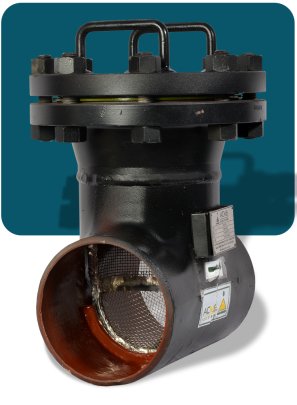
ISO certified unit in India that manufactures of Strainer

ISO certified unit in India that manufactures of Strainer
T Type Strainers Manufacturer and Exporter in India provide robust filtration solutions designed to remove debris and solid particles from liquid, gas, and steam pipelines. Known for their high dirt-holding capacity, low maintenance, and efficient performance, T Type Strainers help protect pumps, valves, and process equipment across a wide range of industrial applications.
A T-Type Strainer is a pipeline filtration device used to remove solid particles such as rust, scale, debris, and dirt from liquids, gases, or steam. Its body is shaped like the letter “T”, allowing installation of a larger filtration element suitable for high-flow industrial applications.
Fluid enters the inlet and flows through a removable perforated or mesh screen located inside the strainer body. Solid particles are trapped by the screen, while clean fluid exits through the outlet. Accumulated debris can be removed by opening the cover or drain connection and cleaning the basket or screen.
• Oil & gas processing plants
• Chemical and petrochemical industries
• Power generation plants
• Water treatment systems
• Cooling water systems
• Marine and shipbuilding industries
• HVAC systems
• Pulp and paper plants
Common body materials include:
• Cast Iron
• Carbon Steel
• Stainless Steel
• Duplex / Super Duplex Steel
• Bronze
The screen is typically made from stainless steel perforated plate or wire mesh.
Screen openings can vary depending on filtration requirements:
• Perforated screens: 3 mm – 10 mm holes
• Wire mesh screens: 20 mesh – 200 mesh
Custom mesh sizes can also be provided depending on the application.
Pressure drop depends on several factors:
• Flow rate
• Screen mesh size
• Debris accumulation
• Strainer size
A clean strainer typically has a very low pressure drop, but it increases as the screen becomes clogged.
Cleaning frequency depends on the amount of debris in the pipeline. In new systems, strainers may require more frequent cleaning due to initial contamination. Installing a differential pressure gauge can help determine when cleaning is required.
Yes, but installation usually depends on design. Most T-Type Strainers are installed horizontally with the screen chamber pointing downward to allow debris collection and easier maintenance.
Key advantages include:
• High dirt holding capacity
• Suitable for large pipelines
• Lower pressure loss in high-flow systems
• Easy maintenance and cleaning
• Strong construction for industrial environments
Industrial T-Type Strainers are available in sizes ranging from:
DN50 (2") to DN600 (24") or larger, depending on project requirements.
Common end connections include:
• Flanged ends
• Butt-weld ends
• Socket weld ends
• Threaded ends (for smaller sizes)
Both provide filtration, but T-Type Strainers are designed for larger pipelines and higher flow rates, while basket strainers are usually used in medium-flow applications with vertical basket elements.
Yes. Many manufacturers offer customization including:
• Special screen mesh sizes
• Magnetic inserts for ferrous particles
• Blow-off valves for cleaning
• High-pressure or high-temperature designs
• Special coatings or materials
Common causes include:
• Clogged screen
• Screen mesh too fine
• Strainer undersized for the flow rate
• Heavy contamination in the pipeline
Cleaning the screen usually restores normal performance.
Sizing depends on several parameters:
• Flow rate (m³/hr or GPM)
• Fluid type and viscosity
• Allowable pressure drop
• Screen open area
• Particle size to be removed
A common engineering rule is:
Strainer screen open area ? 3 to 5 times the pipeline cross'sectional area to minimize pressure drop and increase dirt holding capacity.