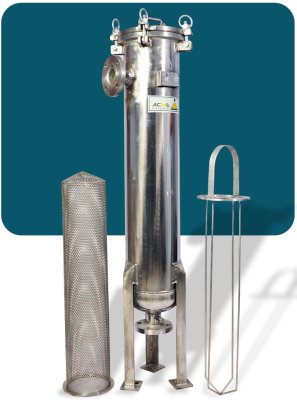
ISO certified unit in India that manufactures of Strainer

ISO certified unit in India that manufactures of Strainer
Bag Filters Manufacturers and Exporters in India provide efficient filtration solutions for removing fine solid particles from liquids in industrial processes. Designed for high dirt-holding capacity and reliable performance, bag filters are widely used in water treatment, chemical, food & beverage, pharmaceutical, and process industries to ensure clean fluid flow and protect downstream equipment.
A bag type filter (also called a bag filter housing) is a filtration system that uses a replaceable fabric or mesh filter bag to remove solid particles from liquids. It is widely used in industries where high dirt-holding capacity and easy maintenance are required.
Fluid enters the housing and flows inside-to-outside (most common design).
Contaminants are trapped inside the filter bag, while clean fluid exits through the outlet.
? High efficiency filtration
? Low pressure drop (when clean)
? Easy bag replacement
Bag filters are classified based on design and application:
• Single Bag Filter Housing – For low to moderate flow rates
• Multi-Bag Filter Housing – For high flow applications
• Duplex Bag Filters – For continuous operation (no shutdown)
• Top Entry Bag Filters – Easy maintenance
• Side Entry Bag Filters – Cost-effective option
Bag filters are available in a wide range of filtration ratings:
• 1 micron to 1000 microns
• Common selections:
o 1–10 micron ? Fine filtration
o 25–100 micron ? General industrial use
o 200+ micron ? Coarse filtration
Filter bags are made from different materials depending on fluid compatibility:
• Polypropylene (PP)
• Polyester
• Nylon
• PTFE (Teflon)
• Nomex (high temperature)
? Chemical resistance
? Temperature compatibility
? Long service life
Bag filters are widely used in:
• Oil & gas processing
• Chemical and petrochemical plants
• Water treatment systems
• Food & beverage processing
• Pharmaceutical industries
• Paints, inks, and coatings
• High dirt holding capacity
• Low operating cost
• Simple design and operation
• Easy maintenance (quick bag change)
• Wide range of micron ratings
• Compact and space'saving
Selection depends on:
• Flow rate (m³/hr)
• Fluid type (viscosity, density)
• Required micron rating
• Operating pressure & temperature
• Dirt load
? Oversizing is recommended to reduce pressure drop and increase bag life.
• Clean condition: 0.1 – 0.3 bar
• Dirty condition: up to 1.0 – 2.5 bar (change-out point)
? Replace the bag when differential pressure rises significantly.
Replacement depends on:
• Contamination level
• Flow rate
• Micron rating
Typical frequency:
• Daily (heavy contamination)
• Weekly or monthly (normal operation)
Yes. Multi-bag filter housings can handle:
• Up to 1000+ m³/hr depending on design
? Ideal for large industrial pipelines
Common industry'standard sizes:
• Size #1 ? ~7” dia × 16” length
• Size #2 ? ~7” dia × 32” length (most widely used)
• Stainless Steel (SS304 / SS316 / SS316L)
• Carbon Steel
• FRP / Plastic (for corrosive applications)
Yes, depending on bag material:
• Polypropylene ? up to ~90°C
• Polyester ? up to ~150°C
• Nomex/PTFE ? up to ~200–260°C
Top Entry >> Better sealing, no bypass
Side Entry >> Lower cost, compact design
Yes. Bag filters are suitable for high-viscosity fluids like:
• Oils
• Resins
• Syrups
• Paints
? Larger surface area reduces clogging
Industrial bag filters are designed as per:
• ASME Section VIII
• ANSI / ASME B16.5 (flanges)
• PED (for Europe)
• ? Bag clogging ? due to high dirt load
• ? High pressure drop ? undersized filter
• ? Bag bypass ? improper sealing
• ? Short bag life ? wrong material selection
? Use correct micron rating
? Select proper bag material
? Ensure proper sealing
? Use pre-filtration (if needed)
? Monitor differential pressure regularly