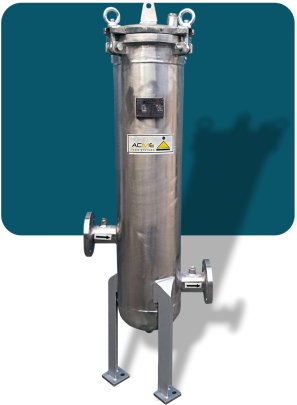
ISO certified unit in India that manufactures of Strainer

ISO certified unit in India that manufactures of Strainer
Cartridge Filters Manufacturers and Exporters in India provide high-efficiency filtration solutions designed to remove fine suspended particles from liquids and gases. These filters use replaceable cartridge elements for precise filtration, low maintenance, and reliable performance, making them widely used in water treatment, pharmaceuticals, chemicals, and industrial processing applications.
A cartridge filter is a precision filtration device used to remove fine solid particles from liquids or gases. It consists of a replaceable filter element (cartridge) housed inside a pressure vessel. Fluid flows from outside-to-inside or inside-to-outside through the filter media, trapping contaminants while allowing clean fluid to pass.
Cartridge filters are available in multiple configurations based on filtration needs:
• Pleated cartridges (high surface area, low pressure drop)
• Melt-blown cartridges (depth filtration for fine particles)
• String wound cartridges (cost-effective sediment removal)
• Activated carbon cartridges (odor, chlorine removal)
• Membrane cartridges (absolute filtration for critical applications)
Cartridge filters are available in a wide range of micron ratings:
• Nominal filtration: 50 µm to 1 µm
• Absolute filtration: 1 µm to 0.1 µm (or finer for sterile applications)
Selection depends on process requirements, contamination level, and downstream equipment protection.
• Nominal rating: Removes ~85–90% of particles of a given size
• Absolute rating: Removes ?99.9% of particles of a specified size
Absolute-rated cartridges are used in critical applications such as pharmaceuticals, food processing, and final filtration.
Common materials include:
• Polypropylene (PP) – chemical resistance, water applications
• Polyester – high temperature durability
• PTFE – aggressive chemicals, solvents
• Nylon – fine filtration and compatibility
• Stainless Steel (SS 304/316) – reusable metallic cartridges
Cartridge filters are widely used in:
• Water treatment and RO systems
• Oil & gas processing
• Chemical and petrochemical plants
• Pharmaceuticals and biotech
• Food & beverage processing
• Power plants and cooling systems
Key parameters for selection:
• Flow rate (m³/hr or GPM)
• Required micron rating
• Fluid type and viscosity
• Operating pressure & temperature
• Contaminant load
A proper sizing ensures low pressure drop and longer cartridge life.
Common industry sizes include:
• Length: 10”, 20”, 30”, 40”
• Diameter: 2.5” (standard), 4.5” (high flow/big blue)
Multi-cartridge housings can accommodate higher flow rates.
Pressure drop depends on flow rate, viscosity, and filter condition. Clean cartridges typically have low pressure drop, but it increases as contaminants accumulate.
General guideline:
• Initial ?P: 0.1–0.3 bar
• Replacement ?P: 1.5–2.5 bar
Cartridges should be replaced when:
• Pressure drop exceeds recommended limit
• Flow rate significantly decreases
• Product quality is affected
Routine monitoring using differential pressure gauges is recommended.
• Disposable cartridges (PP, melt-blown, string wound): Not reusable
• Metallic cartridges (SS): Can be cleaned using backwashing, ultrasonic cleaning, or chemical methods
A multi-cartridge housing contains multiple filter cartridges inside a single vessel to handle higher flow rates. It is commonly used in industrial systems requiring continuous and high-capacity filtration.
Typical ranges:
• Pressure: Up to 10–16 bar (depending on housing design)
• Temperature: Up to 80–150°C (depending on cartridge material)
Best practices:
• Monitor differential pressure regularly
• Replace cartridges on time
• Inspect seals and O-rings
• Ensure proper installation to avoid bypass
High-flow cartridges are designed for large flow rates using fewer elements. They feature:
• Larger diameter (6” or more)
• Inside-to-outside flow design
• Reduced footprint and maintenance
Absolute filtration ensures near-complete removal of particles at a defined size. It is essential for:
• Sterile filtration
• Final product polishing
• Protection of sensitive equipment
Industrial cartridge filters may comply with:
• FDA (food-grade applications)
• USP Class VI (pharma)
• ISO standards
• ASME (for housings)
Common reasons:
• High dirt load in fluid
• Incorrect micron selection
• Undersized filter housing
• Sudden contamination surge
Yes, but:
• Lower flow rates are required
• Larger surface area (pleated filters) is preferred
• Proper sizing is critical to avoid high pressure drop